

Ophthalmologist
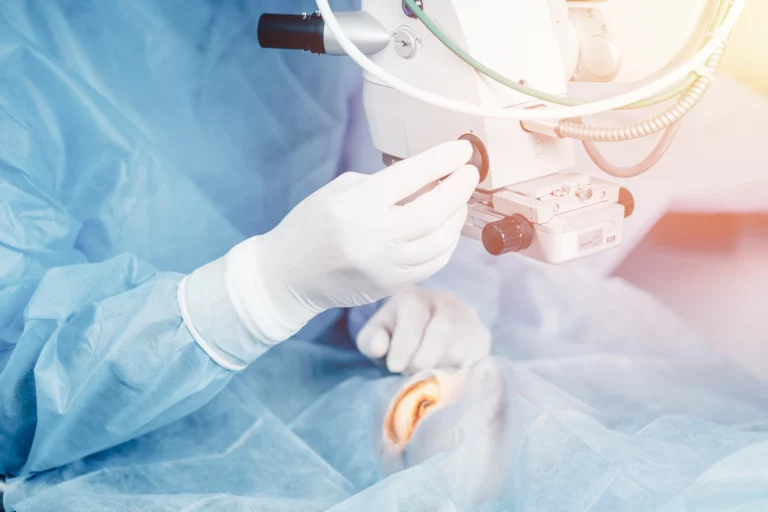
The operation is carried out in ambulatory, under local anaesthetic using drops. The surgeon begins by creating a thin flap in the cornea using a femtosecond laser or a mechanical microkeratome. This flap, similar to a small «bonnet», is gently lifted to expose the underlying layer of the cornea.
The excimer laser is then applied to this internal zone to correct the shape of the cornea according to the patient's visual defect. Once the treatment is complete, the flap is repositioned without the need for sutures: it adheres naturally and stabilises quickly.
One of the great advantages of LASIK is the almost immediate recovery of vision. Most patients already see clearly the next day, and can resume their usual activities very quickly. The procedure is painless, and postoperative discomfort is generally minimal.
LASIK is suitable for many patients, but it requires a cornea of sufficient thickness and good stability of the visual defect. A thorough pre-operative assessment is therefore essential to check eligibility.
The results are excellent: in the vast majority of cases, patients achieve clear vision without glasses or contact lenses. Complications are very rare, but as with any surgery, they do exist (temporary dry eyes, night halos, residual corrections, complications linked to the bonnet, keratoconus).
After the operation, it is important not to rub the eyes intensely.
In short, LASIK is a modern technique, safe and efficient, which offers a rapid and lasting visual freedom.
After refractive surgery, patients are advised to see an ophthalmologist annually for an ophthalmological examination.
We use cookies to guarantee you a better experience on our site.
Quality since 1985
With 40 years' experience, we have built our reputation on the quality of our service and the satisfaction of our customers.
